
Lunatic Fringe
Bad hair day at the asylum

My orange Subaru coasted down the highway to yet another protest, backseat bristling with freshly-minted signs. The air was redolent with the intoxicating scent of Sharpies. That’s when my trusty ally G, lounging in the passenger’s seat, said, “Do you know the origin of the phrase ‘lunatic fringe’?”
“Hmmmm…” I pondered outloud. “I figured it was just something about crazy people being on the fringe of society. I also incidentally think it would be a great name for a band.”
“No,” G explained. “It was actually a Victorian hairstyle. The word ‘fringe’ in British English means ‘bangs’ as in hair bangs. The term was used as an insult for these crazy-haired ladies in the late 1800s. The idea was that the popular hairstyle resembled the haircuts given to those in institutions, like insane asylums. Get it? Lunatic fringe.”
Literal translation: crazy bangs.
These quotations are from the Readex digital collection America’s Historical Newspapers.
New York young ladies still let their hair cascade over their foreheads in the “lunatic fringe” (St. Louis Post Dispatch, 26 May 1876).
The latest style in hair is lunatic fringe. It is very popular. (San Francisco Chronicle, 6 Oct. 1878).
As might be inferred from the name bestowed on this hairstyle, descriptions from that time considered it unorthodox or even scandalous.
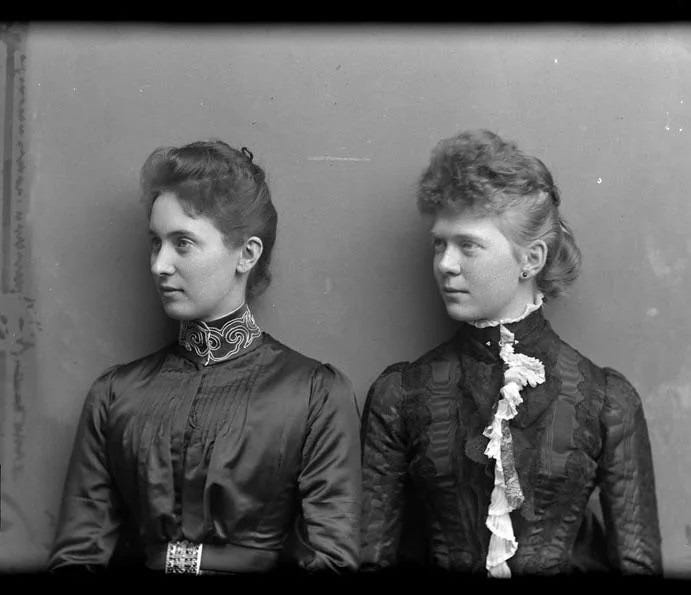
In 1893, Haryot Cahoon published What One Woman Thinks, a collection of personal essays. Cahoon suggests that when women “banged” their hair, they were challenging traditional female stereotypes. This was a nudge toward gender equality, which men found unsettling. However, she also describes the bold look as alluring. The hairstyle was both provoking and provocative.
“Cutting bangs – that fringe of hair that covered the forehead somewhere between hairline and eyebrows – was a badge worn by a young girl as she approached womanhood, a rite of passage. She looked in the mirror and saw the smooth hair and middle part of a modest youth, and no longer wanted to be that person. Once she cut a ‘prankish’ fringe, it opened up a whole new world for her. The submissive oval face was suddenly framed with fringe over laughing eyes, and laughing eyes in a woman catch the attention of men.”
— Haryot Holt Cahoon, What One Woman Thinks (New York: Tait, Sons & Company, 1893), 89-92.
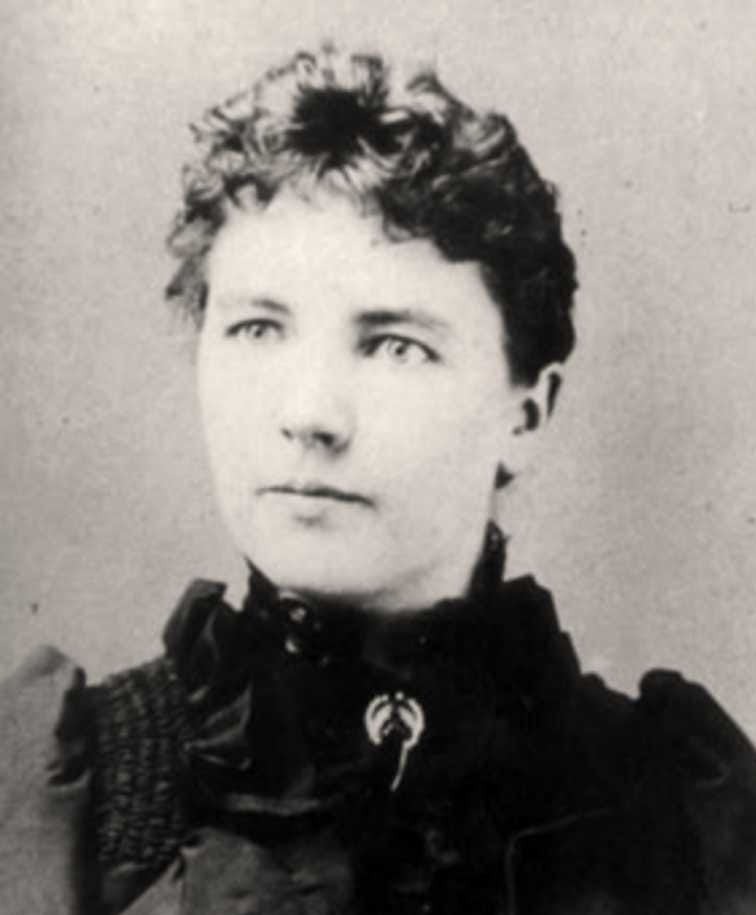
Laura Ingalls Wilder, in Little Town on the Prairie, describes how, as a teenager, she begged her mother for bangs, just like her friend Mary Power. Ma Ingalls replies, “Mary Power is a nice girl, but I think the new hair style is well called a ‘lunatic fringe’”. Laura, before the “dime sociable” of 1884 finally convinces her mother to let her cut delicate bangs, which she then curls using a heated lead pencil.
This led me down another avenue of thought, not so much about the hairstyle itself, but rather about its implications. Women sporting this hairstyle were dubbed “lunatics” by virtue of their fashion choices. This still happens every day. Our hairstyle, cut of clothing, height of heel, and even cosmetic choices heavily influence what others think about us. We are all guilty of making assumptions about others based on physical appearance.
However, scrutiny of personal appearance is focused much more on women than men. It is well-documented that women in politics are disproportionately judged and criticized for their style choices.
“There are three things women politicians get more ink in the press over than males. One is hairdo, two is hemline and the third is their husband, as society tends to be very concerned about these things with women politicians.” said Nichola D. Gutgold, associate professor of communication arts and sciences at Penn State Lehigh Valley in Fogelsville.
The Washington Post wrote an entire article about it with the first sentence reading, “There was cleavage on display Wednesday afternoon on C-SPAN2. It belonged to Sen. Hillary Clinton.”
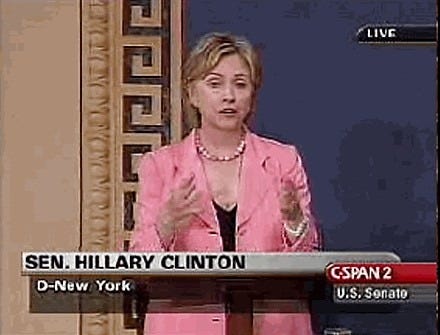
The rest of the article goes on to dissect the meaning and implications of a senator showing cleavage. A woman’s neckline should not determine her provocativeness, yet Clinton’s blouse being cut slightly lower than usual forced the media into a frenzy of sex shaming.
More recently, the fur coat worn by Marjorie Taylor Greene to the 2023 State of the Union was relentlessly mocked on social media with comparisons to Cruella De Vil of Dalmatians fame.

Although this occasion was notable for a member of Congress brazenly heckling President Biden during his State of the Union speech, most of the criticism was focused on her appearance, not on her words or behavior.
Although judgment of personal appearance is largely reserved for females, there are exceptions. The “tan suit controversy” refers to a minor political and media uproar that occurred in August 2014 when then-President Barack Obama wore a tan suit during a press conference. Some critics and media commentators felt that the light-colored suit was too casual or inappropriate for the serious topics being discussed, in particular, U.S. foreign policy. Headlines abounded – “Yes we Tan!” and “The audacity of taupe.” Fox News’ Lou Dobbs went so far as to call it “un-presidential” and implied Obama was sending a covert message, possibly to our enemies, via suit color.

When in 2024 Vice President Kamala Harris appeared on stage at the Democratic National Convention in Chicago, the talk was all about her choice of suit color. “It’s not tan! The internet is abuzz about Kamala Harris’ suit color on DNC stage” screamed the headline in USA Today. Internet sleuths quickly tracked down that Harris was wearing a tailored, double-breasted jacket in wool “grain de poudre” by Chloe, and that the color was in actuality…wait for it…wait for it…coconut brown.
Therefore, this was not truly an homage to Obama’s infamous suit or some black fashion conspiracy. How disappointing. But what did Kamala Harris actually say at the convention? The world will never know.
One could surmise that the words, thoughts and contributions of female politicians are not valued. Instead, a woman is seen first and foremost as a fashion plate. The inclusion of a black man among those judged harshly for their personal style choices would lead to a similar conclusion. White men are to be taken seriously; others not so much.
The messages sent by our fashion choices are not always unintended or subtle. People also make deliberate personal style choices that are orchestrated to send a message or signify group identity.
Recently, a new cosmetic trend has presented itself: the Mar-a-lago face. Beloved and copied by some, and disparaged by others, it signifies wealth and allegiance to conservative, traditional concepts of feminine beauty. It has been popularized by the MAGA elite.
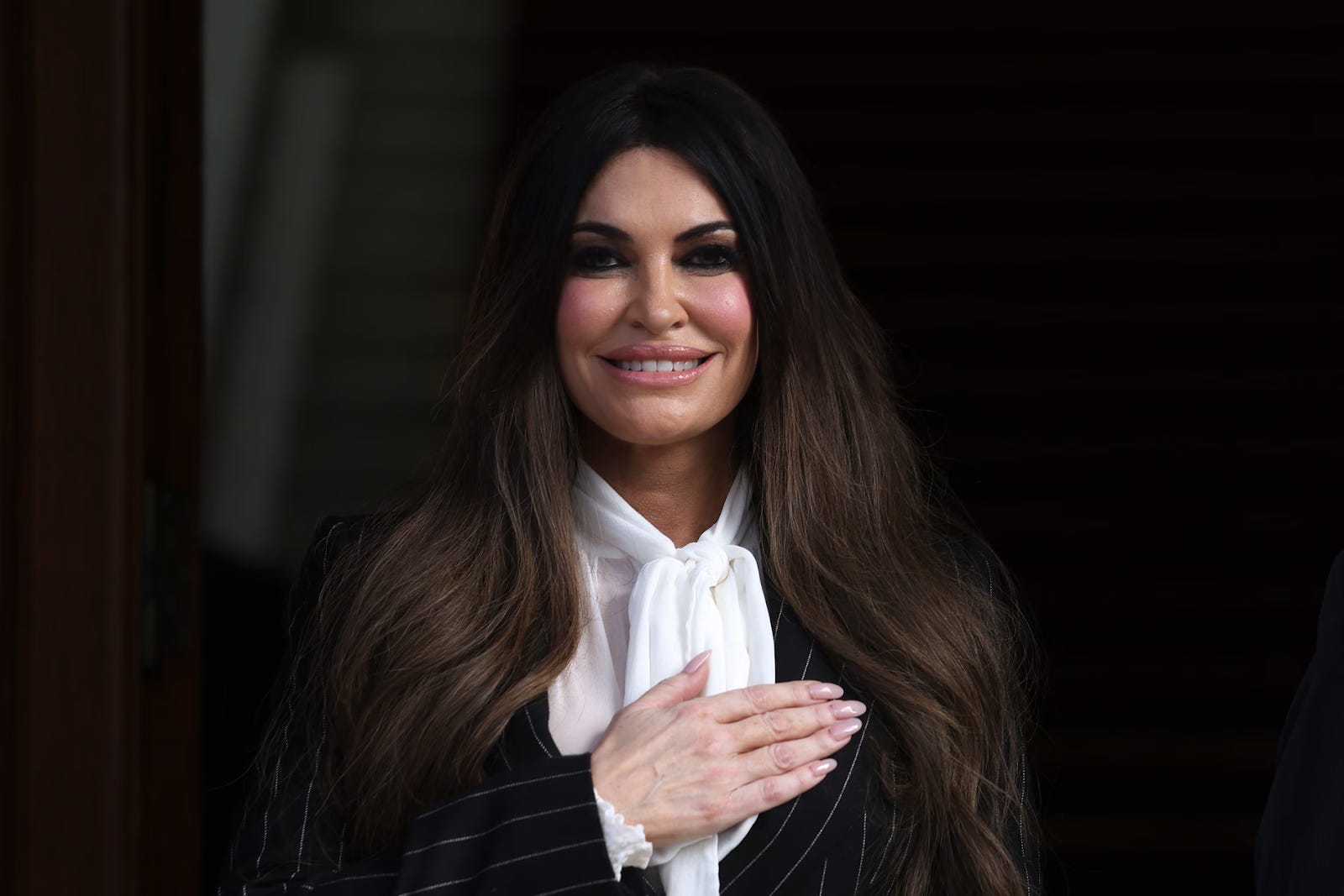
The makeup is overdone and facial features exaggerated: puffy lips, prominent cheekbones, high-arched brows. This appearance is achieved with a combination of cosmetics, facial enhancing injectables, and often plastic surgery. The overall effect is a conspicuously enhanced beauty standard–one that requires money, time, upkeep, and is not attainable by the general populace.
The term “lunatic fringe” also got me thinking about the actual “lunatics” who inspired the haircut. These were the Victorian women locked away behind the walls of asylums for the mentally deranged. The reasons given for locking away these individuals–often women of a certain class, certain age, and of some financial means–were ostensibly protection and rehabilitation. However, these facilities rarely afforded either.
The wisdom of the age portrayed women as meek, delicate, and equipped for being wives and mothers. Therefore, women who exhibited assertiveness, ambition, or interests outside of the domestic realm were considered unnatural, even ill. Women who studied or read—or who simply had minds of their own and a determination to use them—were demonstrating “eccentricity of conduct,” which meant they were “morally insane,” a diagnosis coined by James Cowles Prichard in 1835. Said one doctor after visiting a girls’ school in 1858: “You seem to be training your girls for the lunatic asylum.”

This was the fate of tens of thousands of women throughout the 19th century and well into the 20th. The Victorian Era ushered in significant changes in medicine. Although there were some enlightened ideas, for many, asylums were prisons disguised as hospitals. It was an opportune way to eliminate the undesirable from society. For those with wealth, private madhouses were handy dumping grounds for ill-behaved wives and daughters. The asylums were a tool wielded by the patriarchy to keep women in line.
Countless women and girls were locked away until they conformed to more “natural, feminine behavior.” It was common for female patients to be diagnosed as suffering from hysteria. The word hysteria derives from the Greek word hystera, for uterus. The prevailing belief at the time was that female reproductive organs were closely linked to emotional and physical well-being. Therefore, derangement of these organs could lead to mental illness.
Many of the treatments were grounded in the belief that fixing or removing the afflicted organ could restore sanity. Hysterectomies were commonplace. Other treatments included physical restraint, chemical restraint with strong sedatives, seclusion, prolonged exposure to hot or freezing water, and blood letting.
Medical records from the day reveal that a 20-year-old woman who spent “much time in serious reading” and a 30-year-old wife who dared express “great distaste for her husband” were among those subjected to the latest treatment to cure female insanity: a clitoridectomy (surgical removal of the clitoris).
One of the most well-documented cases involves Elizabeth Packard, who was involuntarily committed in 1860 to the Illinois Hospital for the Insane, by her husband, a Calvinist minister. Elizabeth, a homemaker and mother of six was institutionalized by her husband because she espoused differing religious views from his.


At the time, the law in Illinois stated that a man was entitled to due process (a hearing or trial) to assess his sanity before being committed. However, married women could be institutionalized at the request of their husbands, without any evidence of mental health issues. Similar laws existed in many states across the country.
Packard remained hospitalized for three years, throughout which time she vigorously protested her confinement. Hospital officials ultimately released her, declaring her “incurably insane”. Upon her release, her husband imprisoned her in their home. She was able to sneak a letter out to a sympathetic friend, which eventually led to a jury trial to determine Packard’s mental state. Neighbors and friends testified on her behalf and one doctor and theologian explained that many intellectuals in Europe shared Packard’s religious beliefs. The jury found Packard to be sane, reportedly turning in their verdict after only seven minutes of deliberation.
After defending her sanity at trial in 1864, Packard went on to campaign for legislation in Illinois and other states that would ensure the rights of those in mental health hospitals and bolster the rights of married women. Through her advocacy, laws were changed in several states, strengthening women’s rights.
However, we digress. Hairstyles and asylums are not what we think about when we hear the phrase “lunatic fringe”. Today, the term largely refers disparagingly to individuals or groups that espouse a viewpoint or credo that is outside the mainstream. The implication is that these “lunatic fringe” are extremists who hold ideas that are contrary to the values of society at large.
The use of the term to denote an extremist group was popularized in 1913 by President Theodore Roosevelt. Roosevelt published a critical review of the International Exhibition of Modern Art, which included Cezanne, Degas, van Gogh, Kandinsky, Picasso, and Matisse, among others. Roosevelt wrote of the exhibit:
“Probably in any reform movement, any progressive movement, in any field of life, the penalty for avoiding the commonplace is a liability to extravagance. It is vitally necessary to move forward and to shake off the dead hand, often the fossilized dead hand, of the reactionaries; and yet we have to face the fact that there is apt to be a lunatic fringe among the votaries of any forward movement. In this recent art exhibition the lunatic fringe was fully in evidence, especially in the rooms devoted to the Cubists and the Futurists, or Near-Impressionists.” (italics added)
He liked the expression so much that he used it in several magazine articles as well as in his 1913 self-titled autobiography, wherein he wrote:
“Then, among the wise and high-minded people who in self-respecting and genuine fashion strive earnestly for peace, there are foolish fanatics always to be found in such a movement and always discrediting it — the men who form the lunatic fringe in all reform movements.” (italics added)
Thank you for joining me on this little excursion into linguistics and history. Despite the circuitous route, we touched on language, hairstyles, fashion, patriarchy, feminism, medical ethics, politics and a few other things along the way. However, there is one further topic to mention. That brings me to the song…

The 80’s song Lunatic Fringe by Red Rider is strangely topical for our day and age.
“Lunatic Fringe / I know you’re out there / You’re in hiding / And you hold your meetings / I can hear you coming / I know what you’re after / We’re wise to you this time / We won’t let you kill the laughter.”
“Lunatic Fringe” is ostensibly about antisemitism, although the precise worldview of the “fringe” is not specified in the lyrics. Red Rider songwriter/vocalist Tom Cochrane told The Canadian Jewish News in 2021,
“I’m not proud of the fact that ‘Lunatic Fringe’ is probably as impactful now as it was back then, but the reality is that it is,” he admits. “These things are all tied together, and they spawn the lunatic fringe. And when the lunatic fringe starts to become the mainstream, that’s when the danger happens, and we’ve seen evidence of that of late…I’m very proud of the song as a piece of art, but art isn’t always pretty.”
While rummaging around in the Substacks I discovered a wonderful homage to this song in another Substack essay by Jim Ruland. Have a read.
So let’s go out with some tunes.
Thank you for this provocative and engaging piece! I love how you tackled a topic that sits at the edge of mainstream discourse and explored it with a mix of curiosity and critical distance. The title itself sets the tone well; it signals both skepticism and a willingness to examine ideas that are often dismissed outright, which makes the essay intellectually interesting from the start.
What stood out to me most was your exploration of how certain beliefs or movements move from the margins toward broader visibility. That process is fascinating and highly relevant in today’s information environment. One aspect that might further strengthen the piece would be to more clearly differentiate between critique of specific claims and the broader social dynamics that allow those claims to spread. That added clarity could help readers engage more precisely with the argument while still appreciating the wider context.
Overall, this was a thoughtful and stimulating read. Thank you for engaging with a topic that benefits from both openness and critical analysis!
Outstanding essay! So much knowledge from the past shared here. Wonderful writing.
Honestly, I had been thinking about getting bangs. Now I kind of wanna do it out of rebellion.